
Hyundai Motor Company just turned a page in its history—and maybe the world’s energy story—by breaking ground on a new hydrogen fuel cell production plant in Ulsan, South Korea. The site, once home to an internal-combustion engine transmission facility, will soon house a 43,000-square-meter factory dedicated to building the beating hearts of hydrogen-powered mobility. Symbolic? Absolutely. Strategic? Without question.
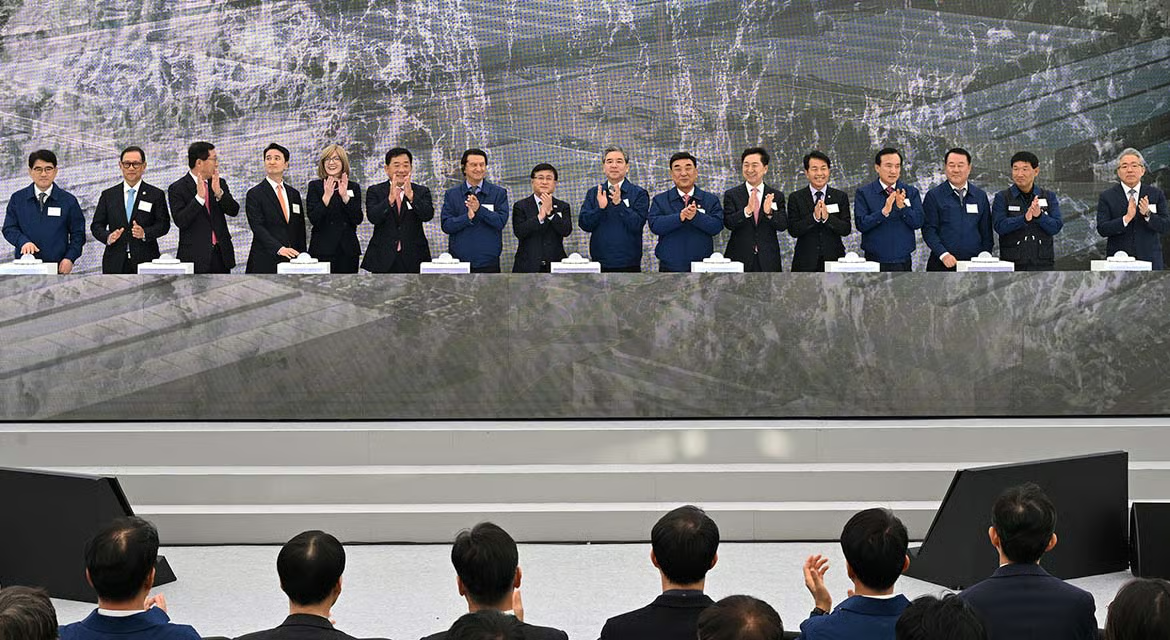
The event, attended by Hyundai Motor Group Vice Chair Jaehoon Chang alongside government officials and industry leaders, marks more than a construction milestone—it’s a declaration that Hyundai intends to lead the global shift toward hydrogen. “This plant embodies Hyundai Motor Group’s strategic commitment to advancing the hydrogen society transition,” said Chang. “It will serve as a critical foundation for securing national economic growth and establishing Korea’s leadership in the global hydrogen industry.”
The New Hydrogen Hub
Set for completion in 2027, the new facility represents a KRW 930 billion (roughly $670 million) investment and will operate under Hyundai’s hydrogen-focused HTWO brand—short for Hydrogen for Humanity. When fully ramped up, the plant will be capable of producing 30,000 fuel cell units annually, serving applications that range from passenger cars and commercial trucks to construction machinery, ships, and buses.
In other words, Hyundai isn’t just thinking about the next-generation Nexo SUV—it’s thinking about an entire ecosystem powered by the smallest element in the universe.
Two Key Technologies, One Bold Vision
The Ulsan plant will build two main products designed to anchor Hyundai’s hydrogen ambitions:
- Next-generation hydrogen fuel cells, designed for improved power, durability, and cost efficiency; and
- PEM (polymer electrolyte membrane) electrolyzers, a technology that converts water into high-purity hydrogen using electricity, all without carbon emissions.
The company claims roughly 90 percent localization of electrolyzer components—an impressive figure that underscores both technological maturity and domestic self-reliance. Hyundai has already demonstrated a 1 MW electrolyzer system, producing over 300 kilograms of hydrogen per day, and is working on a 5 MW project in Jeju to expand green hydrogen production.
From Pistons to Proton Exchange Membranes
Replacing a transmission plant with a hydrogen production hub feels like poetic justice for a company that once built its identity on ICE vehicles. But Hyundai isn’t sentimental—it’s pragmatic. Hydrogen fuel cells, which generate electricity by combining hydrogen and oxygen in an electrochemical reaction, are seen as a scalable complement to battery-electric technology, particularly for heavy-duty and long-range applications where fast refueling and high energy density matter.
To make that vision real, Hyundai will deploy advanced robotics and safety monitoring systems throughout the new facility, improving both worker safety and manufacturing precision. The company describes the plant as an “advanced manufacturing platform,” suggesting it will serve as a blueprint for future hydrogen facilities globally.
Building a Hydrogen Ecosystem
Hyundai’s ambitions go far beyond vehicle powertrains. The company envisions a full hydrogen value chain—from production and storage to transport and end use. That vision is already attracting partners: at the ceremony, Hyundai signed an MoU with KGM Commercial, a major Korean bus manufacturer, for the supply of hydrogen fuel cells.
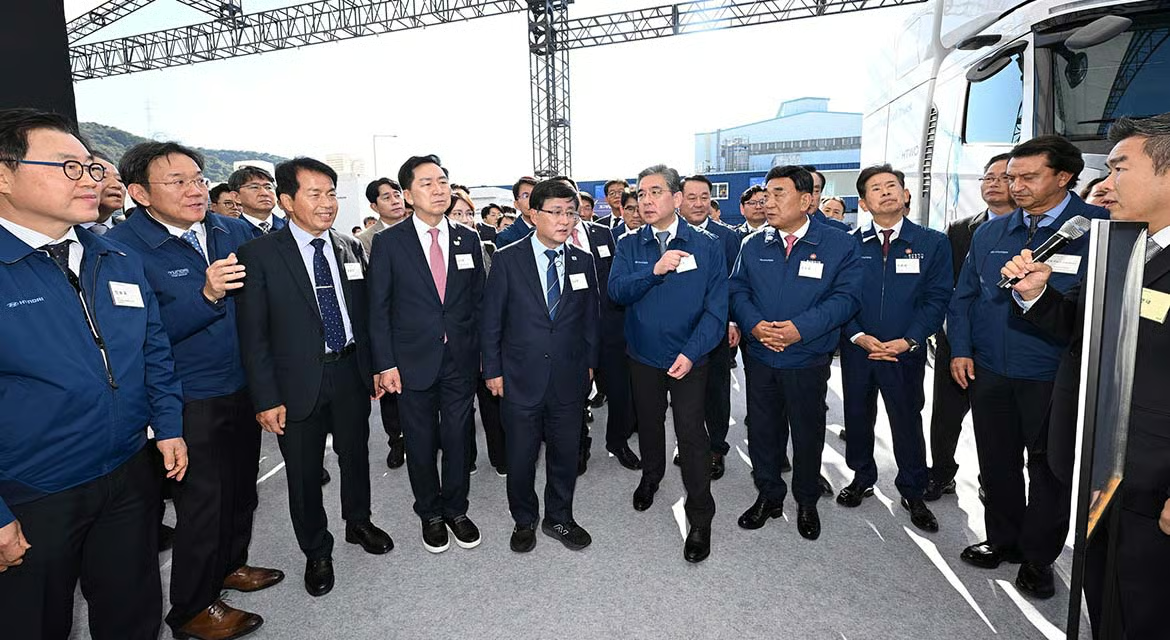
Guests at the event were treated to a showcase of Hyundai’s hydrogen-powered lineup, including the all-new Nexo, fuel-cell trucks, excavators, marine vessels, tractors, and forklifts—a vivid reminder that hydrogen’s promise extends well past the highway.
While the global auto industry continues its battery-electric love affair, Hyundai is keeping the hydrogen flame alive—and doing so at scale. The company’s long game is clear: to diversify clean energy mobility and give hydrogen the industrial muscle it needs to compete.
If the Ulsan facility delivers as promised, South Korea won’t just be home to one of the world’s most advanced hydrogen production plants—it could become the nexus of a cleaner, faster, and more versatile mobility future.
Source: Hyundai